Deep Breaths: 8 Techniques for Fast, Calming Relief

Breathwork isn’t about mastering something new, but instead, returning to something natural. As fall settles in and routines grow fuller with back-to-school, carpool schedules, and the 9-to-5 grind, find out how breathwork techniques offer a quiet counterbalance and a gentle reset.
The Science of Slowing Down
Your breath directly influences your nervous system. Shallow, rapid breathing signals stress—your body’s response to a perceived threat. Slow, deep breathing signals to your brain that you’re safe. Your heart rate slows, muscles relax, and thoughts begin to untangle. Even 60 seconds of measured, deliberate breathing can interrupt a stress response and shift your body into a more relaxed state.
Don’t believe us? Findings from the National Institutes of Health reveal that intentional breathwork activates the same cellular targets as pharmaceutical morphine. It stimulates your parasympathetic nervous system, easing muscle strain and helping your brain exit “fight or flight” mode. Deep breathing also promotes healthy blood flow, delivering more oxygen to tissues and releasing tension.
8 Breathing Techniques to Know (and Actually Use)
In through your nose. Pause. Out through your mouth. Breathing during moments of stress, overwhelm, or restlessness is one of the most effective ways to find relief. Your breath is always with you, always accessible, and incredibly potent when used intentionally. Use the following techniques to keep calm and carry on.
Box Breathing
Best for: Steadying nerves, improving focus
This structured breathing pattern—also known as the 4-4-4-4 method—is used by athletes, first responders, and even military personnel to remain cool under pressure. The rhythm creates a sense of control and predictability, making it especially helpful when you’re feeling anxious or overwhelmed.
Try it:
- Inhale through nose for 4 counts
- Hold for 4 counts
- Exhale slowly through mouth for 4 counts
- Hold again for 4 counts
- Repeat 4 to 6 cycles

Extended Exhale
Best for: Slowing a racing mind, preparing for sleep
If you remember just one technique from this guide, make it this one. A longer exhale communicates to your body that it’s safe to relax. This practice is particularly valuable at night, when thoughts are active, but the body is ready to wind down.
Try it:
- Inhale for 4 counts
- Exhale for 6 to 8 counts
- Continue for 1 to 3 minutes
4-7-8 Breathing
Best for: Releasing tension, reducing stress quickly
Often called a “natural tranquilizer,” this method encourages deep relaxation in just a few rounds. The extended hold and the longer exhale work together to slow your heart rate for a noticeable sense of calm.
Try it:
- Inhale gently through nose for 4 counts
- Hold for 7 counts
- Exhale forcefully through mouth for 8 counts
- Repeat up to 4 cycles
Physiological Sigh
Best for: Immediate stress relief
This science-backed technique mimics a reflex your body already uses to regulate stress and tension. A double inhale fully expands the lungs, while a long exhale releases carbon dioxide and tightness. This method is a fast way to experience a soothing change in your body.
Try it:
- Inhale deeply through nose
- Follow with quick second inhale (short sip of air)
- Exhale slowly through mouth
- Repeat 2 to 3 times
Belly Breathing
Best for: Everyday relaxation, grounding
Also referred to as “diaphragmatic breathing,” this practice facilitates fuller, deeper breaths. It’s a great starting point if you’re new to breathwork, building awareness and helping retrain shallow breathing patterns that can spike with stress.
Try it:
- Place one hand on chest, one on belly
- Inhale through nose, allowing belly to expand
- Exhale slowly, letting belly fall
- Keep chest as still as possible
- Continue for 2 to 5 minutes
- Repeat 2 to 3 times per day
RELATED: Cupping, Stretching, Reflexology: What Are They & How Do They Work?
Equal Breathing
Best for: Daily balance, soft mental reset
Sometimes a little calm doesn’t require a big shift, just a quick return to balance. Equal breathing creates a steady, even cadence that smooths fluctuations in your energy and attention, making it a simple tool for recalibrating without overcorrecting.
Try it:
- Inhale through nose for 5 counts
- Exhale through nose for 5 counts
- Continue for several minutes
Counting Breath
Best for: Quieting mental noise, improving focus
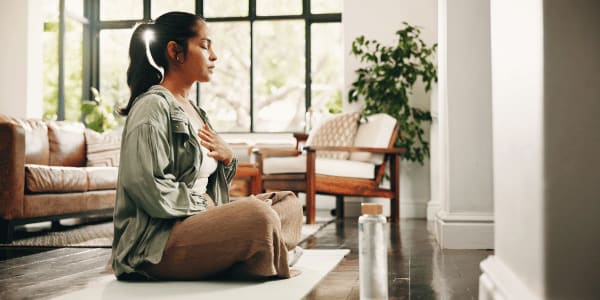
When your thoughts begin to loop or become scattered, your mind needs a soft point of focus. This technique delivers exactly that! Pairing breath with counting interrupts the thought spiral and guides your attention back to the present.
Try it:
- Inhale naturally
- Exhale and silently count “one”
- For next breath, count “two”
- Continue up to 5, restarting at 1
- Repeat as needed
Morning Reset
Best for: Energy, clarity, starting the day
Instead of jolting your system awake, this pattern lightly develops energy. The morning reset clears mental fog and eases you into the day with sharpness and steady concentration.
Try it:
- Inhale deeply through nose
- Exhale through mouth
- Gradually deepen inhale, lengthen exhale with each round
- Continue for 1 to 2 minutes
More Relaxation Techniques
These breathwork techniques aren’t the only way to bring the body to a state of calm and relieve stress. Cold plunging offers similar benefits, especially after extended exercise. Read “Take the Plunge: Explore the Benefits of Cold Plunging” to learn more about the benefits of the trend, how to perform cold plunges correctly, and tips for maximum relief.
Breathwork Techniques FAQs
Can you teach yourself breathwork?
Yes, you don't need an instructor or expert to learn breathwork techniques. Use guides, videos, and practice simple techniques to teach yourself successfully.
What is the most powerful breathing technique?
The psychological sigh is one of the most powerful breathing techniques because it uses a double inhale to fully expand the lungs, followed by a long exhale to release carbon dioxide and relieve tightness.
How many times a day should you do breathwork?
You should do breathwork during the major portions of your day: early in the morning to wake your body up, midday to reset and clear mental fog for the back half of your workday or school day, and in the evening to help your body rest for the night.
Is breathwork a spiritual practice?
Some breathwork techniques are rooted in ancient and modern spiritual beliefs, but others exist solely for physical and mental health purposes.