Everything You Need to Know About Watermelon for Watermelon Day
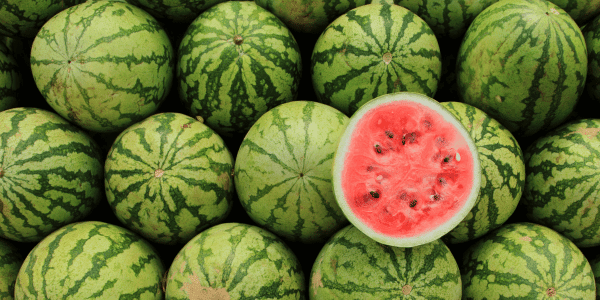
Watermelon is the quintessential fruit of summer. Served at the neighborhood block party, stocked for the afternoon pool bash, or enjoyed during a backyard BBQ, watermelon has its own special place at dining tables across the United States during warm, dewy months. In honor of National Watermelon Day on August 3, here’s a breakdown of everything you need to know about watermelon.
When Is Watermelon Season?
In many areas across the U.S., you can find watermelon at your local grocery store year-round. However, watermelon season generally runs from May through September. That’s when the fruit is at its ripest and sweetest, making it an ideal snack for watermelon lovers of all ages.
How to Pick a Good Watermelon
The best watermelons are sweet, watery, and maintain their shape. To pick a good watermelon that’s going to give you the best flavor bang for your buck, always:
- Buy a watermelon grown locally. Locally-grown watermelons don’t have to travel far to sell, so they can sit on the vine and ripen longer.
- Look for its resting spot. A yellow, creamy-looking spot means that the watermelon had time to sweeten. A white spot or no spot indicates it was picked early.
- Inspect the stem. Good watermelon should have a dry, brown stem. A green stem suggests it’s bland.
- Check the weight. Lift the watermelon to check if it’s heavy. If you’re surprised by how much it weighs for its size, that’s a good thing. That signals high water content.
- Thump it. Another measure of ripeness. You want the watermelon to sound hollow, not dull.

Health Benefits of Watermelon
One of the biggest benefits of watermelon is its high water content. A watermelon is about 90% water, so it’s a great way to meet your daily water intake goals. Here are some additional health benefits of this large, tasty fruit:
High in antioxidants. Antioxidants help protect your cells from free-radical damage. Free radicals can lead to oxidative stress, which can cause a number of diseases, like diabetes and high blood pressure, over time.
Low in calories. At approximately 40 calories per cup, watermelon is a low-calorie and filling treat. Because of its high water content, it helps you feel fuller longer, and allows you to better maintain a healthy body weight.
Strengthens immune health. Watermelon contains a high amount of vitamin C, which helps you fight infections and is important for wound healing.
Supports vision. Packed with vitamin A, watermelon strengthens vision, organ function, and growth and development.
LEARN MORE: “Essential Vitamins List: 17 of the Most Popular Types of Vitamins”
7 Watermelon Fun Facts
Check out the most interesting facts about the most refreshing summertime staple.
- Watermelon was first picked more than 5,000 years ago in Egypt. It’s depicted in the hieroglyphics of ancient Egyptian walls.
- Did you know that seedless watermelon was invented only 50 years ago? Professor Hitoshi Kihara was the geneticist who invented the seedless watermelon in Japan.
- No, you will not grow a watermelon in your stomach if you swallow a seed. Your stomach does not provide the optimal growing conditions—end of story.
- There are more than 300 different types of watermelon. The most common ones include seeded watermelon, seedless watermelon, mini watermelon, sugar baby watermelon, and crimson sweet.
- China is the world’s top producer of watermelon. It harvests approximately 64 million tons annually. India comes in second with 3.6 million tons produced.
- The heaviest watermelon ever recorded weighed 350.5 lbs. It was grown by Chris Kent of Tennessee in 2013, according to the Guinness Book of World Records.
- You can freeze watermelon. It’s safe to consume freshly frozen watermelon, just don’t wait too long to eat it. Watermelon that’s been in a freezer for an extended period of time will lose its flavor, texture, and color.
Watermelon Recipes
Watermelon can be enjoyed on its own, grilled, or to enhance your favorite fruit or salad. Here are two of our favorite ways to use watermelon in a recipe.
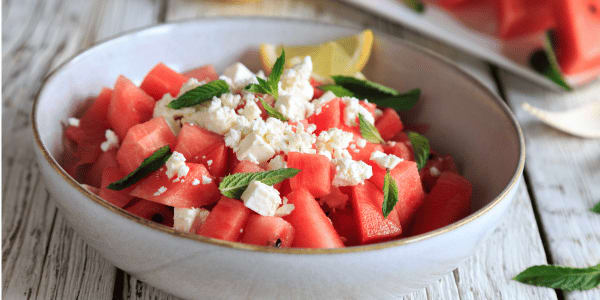
Watermelon Feta Salad
Serves 4
Ingredients
- 1 small watermelon, cubed
- ½ lime, juiced
- 1 Tbsp. olive oil
- Salt
- ½ cup Feta, crumbled
- Fresh mint leaves
Directions
- Mix watermelon, lime juice, olive oil, and salt in a medium bowl. Top with feta crumbles and mint leaves.
- Serve immediately or chill up to 8 hours.
Ótai (Tongan Watermelon Drink)
Serves 10
Ingredients
- 5-6 cups seedless watermelon, shredded
- 1 (20 oz) can crushed pineapple with juice
- 1 (13.5 oz) can coconut milk
- 3 Tbsp. granulated sugar
- 2 cups ice, crushed
Directions
- In a large bowl, mix the shredded watermelon with the crushed pineapple and juice and coconut milk.
- Stir in the sugar and crushed ice.
- Chill for 30 minutes and serve.
MORE WATERMELON RECIPES: Main Squeeze: Refreshing Summer Cocktail Recipes
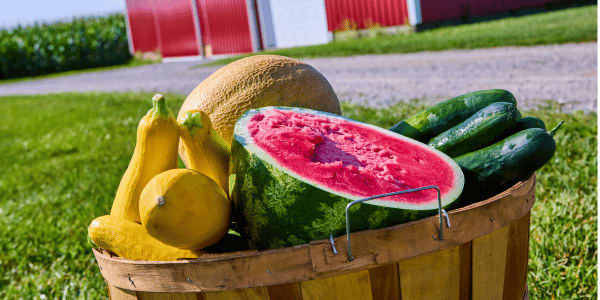
All About Squash, Watermelon’s Closest Cousin
We’ll let you in on a little watermelon family secret: It’s a gourd. Just like squash, they grow on vines, have male and female flowers on the same plant, and are considered a modified berry, or a pepo. To learn more about watermelon’s favorite cousin, read “9 Types of Squash & The Best Ways to Use Them.”
FAQs About Watermelon
What is National Watermelon Day?
National Watermelon Day falls on Monday, August 3, 2026, and it’s a day to celebrate the wonderful benefits of watermelons.
What is the two finger rule for watermelon?
Place your pointer finger and middle finger together to measure a strip of dark green rind on the watermelon. If both fingers fit within the dark green space, it’s ripe and delicious.
What are five facts about watermelon?
Five facts include 1. Watermelons are primarily made of water. 2. Watermelons include antioxidants. 3. Watermelons were discovered 5,000 years ago. 4. Watermelons come in 300 different types. 5. Watermelons come in seedless and seeded varieties.
What does tapping a watermelon mean?
Tapping a watermelon allows you to learn how ripe it is. If it sounds hollow when you tap, it’s ripe. If it sounds dull, it’s likely bland.