Are Space Heaters Safe? Tips for Using Them at Home

When temperatures drop, a space heater is the perfect tool to add extra warmth to a chilly bedroom or cool office space. Just be careful to follow usage and safety guidelines. According to the National Fire Protection Association, heating equipment was responsible for over 37,000 fires from 2020 to 2024, with space heaters and heating stoves accounting for 47% of these incidents. Follow this guide on space heater safety to warm yourself without worry.
What is a Space Heater?
A space heater is a portable appliance used to warm a limited area. They’re often used in place of—or in addition to—a central heating system.
Types of Space Heaters
Portable heaters are available in various forms. Each version might be made of different materials or use a unique system to warm a space. Here are some of the kinds of electric space heaters you might find for sale:
- Infrared heaters: Infrared bulbs use electromagnetic radiation to generate heat.
- Ceramic heater: Uses a ceramic heating element to blow warm air.
- Fan-forced heater: Fans push air over a heat source and distribute it outward.
- Oil/water-filled heater: Water or oil flows through the machine to heat, as a radiator would.
How Much Electricity Does a Space Heater Use?
The average electric space heater uses between .75 and 1.5 kilowatts per hour at full power. The average central heating system typically uses 3 to 5 kilowatts per hour. With this in mind, using a space heater may save you energy costs, but in most cases, it will be cheaper to have central heating warm up your entire home than to have multiple space heaters or move a single space heater from room to room.
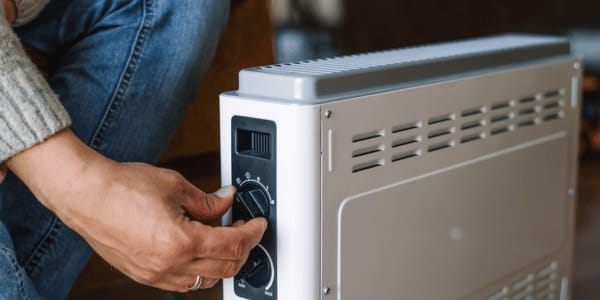
10 Space Heater Safety Tips
Used with caution, space heaters can quickly warm the coolest of places. Danger arises when important safety rules and recommendations are ignored. These are the top 10 space heater safety tips:
1. Confirm the unit includes a safety label.
Any legitimate space heater should have a seal that confirms it was tested by a qualified laboratory before being sold in a store. You can also find lists online for heaters approved by organizations like the Underwriters Laboratories (UL) and Intertek (ETL).
2. Make sure devices have back-up safety features.
Safety labels are great, but space heaters with an auto-shutoff feature should be at the top of your buying list. These units are designed to shut down automatically at certain times or temperatures and sometimes even turn off if they sense the heater has tipped over.
3. Place space heaters away from flammable surfaces.
Space heaters should be placed three feet from anything that’s flammable. The radiating heat from the machine can spark flames, and many units have coils and blades that can get hot enough to burn or melt surfaces on touch, including people and pets!
4. Avoid situating the space heater in high-traffic areas.
Space heaters should be on solid, flat surfaces. Keep them out of areas with heavy foot traffic, like kitchens, to avoid accidental collisions, and never block exits in case of a fire or other emergency.
5. Don’t put the heater in the garage.
While some workspaces welcome the added warmth, putting a space heater in a garage or workshop can be more dangerous than you think. The warmers could accidentally light paint, gas, or matches on fire.
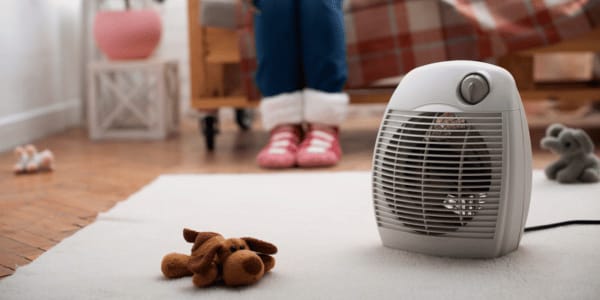
6. Inspect the device for faulty pieces.
Check for cracks, broken plugs, and loose connections before every use. If you notice anything is off, don’t plug it in or power it on.
7. Don’t plug the heater into an extension cord.
Have you ever seen space heaters banned from your office job? The company has good reasoning! Extension cords and power strips can easily overheat when heaters are plugged in. Never have other electrical devices plugged into the same outlet. Your space heater should have a wall outlet all to itself.
8. Install a smoke detector near the heater.
Install a smoke detector near any space heater, just in case sparks fly. Test the detector monthly to ensure it still works, along with any others in your home.
9. Use space heaters only as intended.
This might seem obvious, but you’d be surprised. Space heaters should only be used for additional heating in a room or space. Never try and use them to warm clothes, cook food, or thaw pipes.
10. Turn it off.
As much as you may want your space heater to run through the night, turn it off and make sure it’s unplugged when you go to bed or leave a room. Overheating at all is bad, and you definitely don’t want it to happen while you’re asleep or away.

Heaters Around the House
Space heaters can safely heat any room in a home. Follow these space heater tips for a fire-free experience and a warm winter. For help with other home heaters, check out “Everything You Need to Know About Water Heaters.” We’ll guide you through the different types of water heaters, help you choose the right unit, and provide important maintenance tips to keep your water temperatures right year-round.
Space Heater FAQs
Is it cheaper to run a space heater or turn up the heat?
If you only need to heat one room, it will be cheaper to run a space heater compared to turning up your central heating system. If you need to warm up the entire house, central heating is the way to go, as heating up spaces with multiple space heaters or taking the time to go from room to room will drive up costs.
Where is the safest place to put a space heater?
Space heaters should be three feet away from anything that can burn or melt. Place them away from high foot traffic on level, hard floor surfaces.
Is it okay to sleep with a space heater on?
No, you should never sleep with your space heater on. The appliance can potentially overheat and catch fire, and you don’t want to be asleep in the event of an emergency.
How long does it take for a space heater to heat a room?
It can take 15-30 minutes for your space heater to adequately heat a room.