12 Best Flowers to Grow This Spring
Warm weather isn’t just ideal for barbecues and home improvement projects. It’s also the perfect time to breathe new life into your garden with various types of spring flowers.
Flowers infuse your landscape with vibrant colors and textures; however, to reap the maximum rewards of planting in-season spring flowers, you must find the right varieties. Read on to discover what flowers bloom in spring for a beautiful glow-up.
TIP: Learn Your USDA Plant Hardiness Zone
The United States Department of Agriculture (USDA) Plant Hardiness Zone Map divides the United States, along with parts of Canada and Mexico, into 13 zones based on the average annual minimum winter temperatures. Understanding your hardiness zone helps you identify which plants will thrive in your area. You can find your zone here.
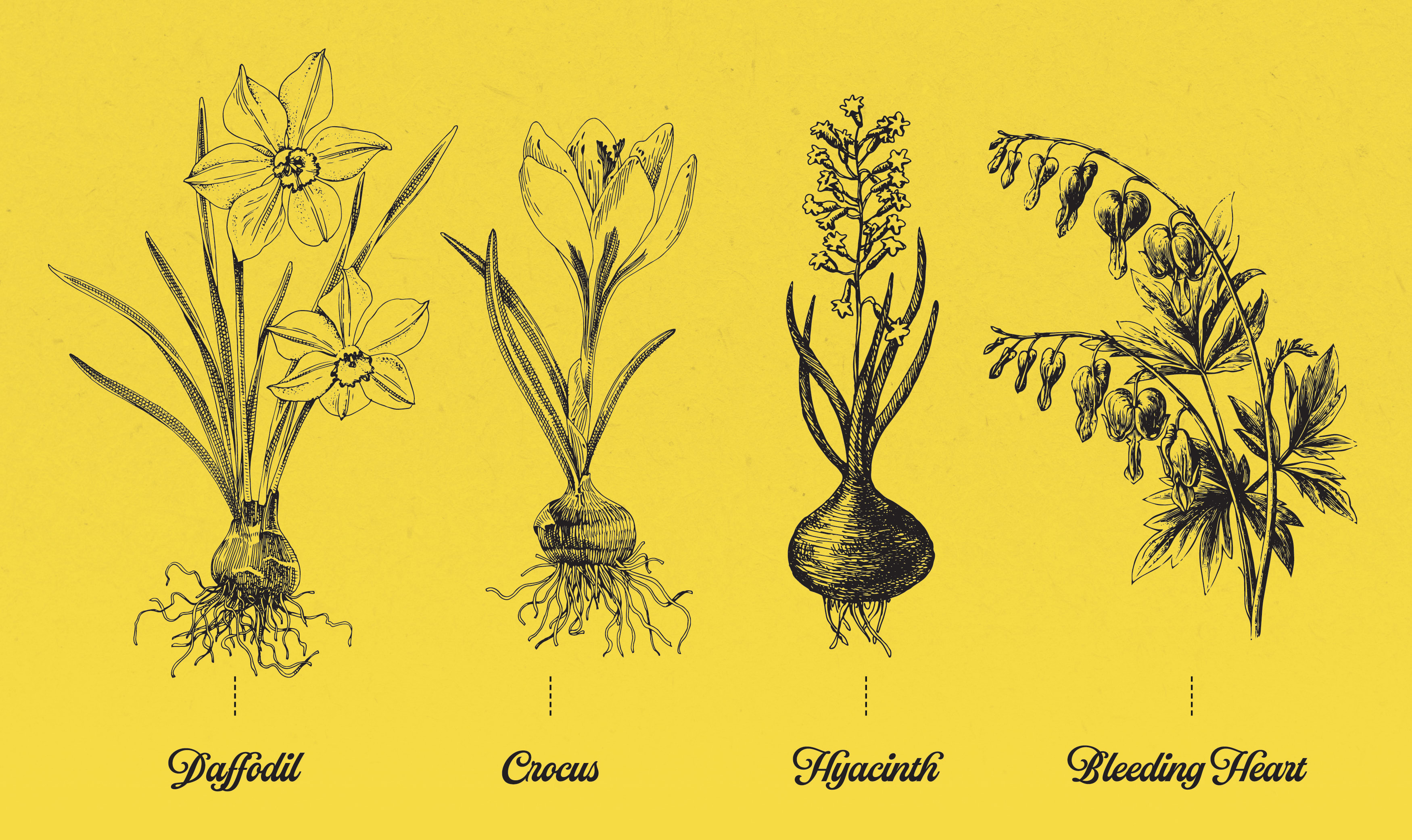
1. Daffodil
Daffodils are iconic, trumpet-shaped spring flowers, featuring vivid hues like yellow, orange, and brilliant white. They’re one of the earliest spring flowers to grow.
What makes them stand out is their hardiness; daffodils are perennials that return reliably year after year. These resilient plants can survive in a wide range of light conditions, making them a low-fuss, high-impact choice for entry-level gardeners
- Zones: 3–8
- Care Tip: Plant daffodils in neutral to slightly acidic soil with good drainage. Regularly water, lightly fertilize in early spring, and keep the leaves in the ground until they turn brown.
- Bloom time: Early to mid-spring
2. Crocus
Crocuses deliver a dazzling splash of color, often before winter ends. They’re a small, yet mighty type of early spring flower, and have cup-sized blooms in lavender, mauve, and yellow.
Perennial crocus plants require almost no care and can grow just about anywhere with full sun and well-draining soil. Plus, they naturalize to their surroundings and keep coming back stronger.
- Zones: 3–8
- Care Tip: Plant crocus in clusters versus rows. Keep the area dry, and water only when the plant has blooms.
- Bloom time: Very early spring
3. Hyacinth
Looking for fragrance? Go for the perennial hyacinth. These spring blooms have a sweet yet intense scent, and their star-shaped flowers grow in blues, pinks, whites, and purples for extra flair.
Undemanding and practical, hyacinths attract pollinators and are deer-resistant. They excel in colder climates, so plant them in the fall and wait for the first blooms in mid-spring.
- Zones: 4–9
- Care Tip: Plant hyacinth before the first freeze. If you live in a warmer climate, keep the bulb in the refrigerator for 12 to 14 weeks beforehand. Grow in large groups for a powerful and far-reaching scent.
- Bloom time: Mid-spring
4. Bleeding Heart
Bleeding heart plants are a popular type of spring flower because they’re so unique. They boast arching stems that hold heart-shaped pink and white flowers. The blooms appear every spring but typically go dormant to store their energy amid the summer heat.
The bleeding heart is a workable option for full-shade areas, where other plants might struggle. Despite the dark corners of your garden often harboring pests, bleeding hearts are notably resistant to them.
- Zones: 3-9
- Care Tip: They do better in rich soil. Keep the soil slightly damp but not waterlogged.
- Bloom time: Mid-spring
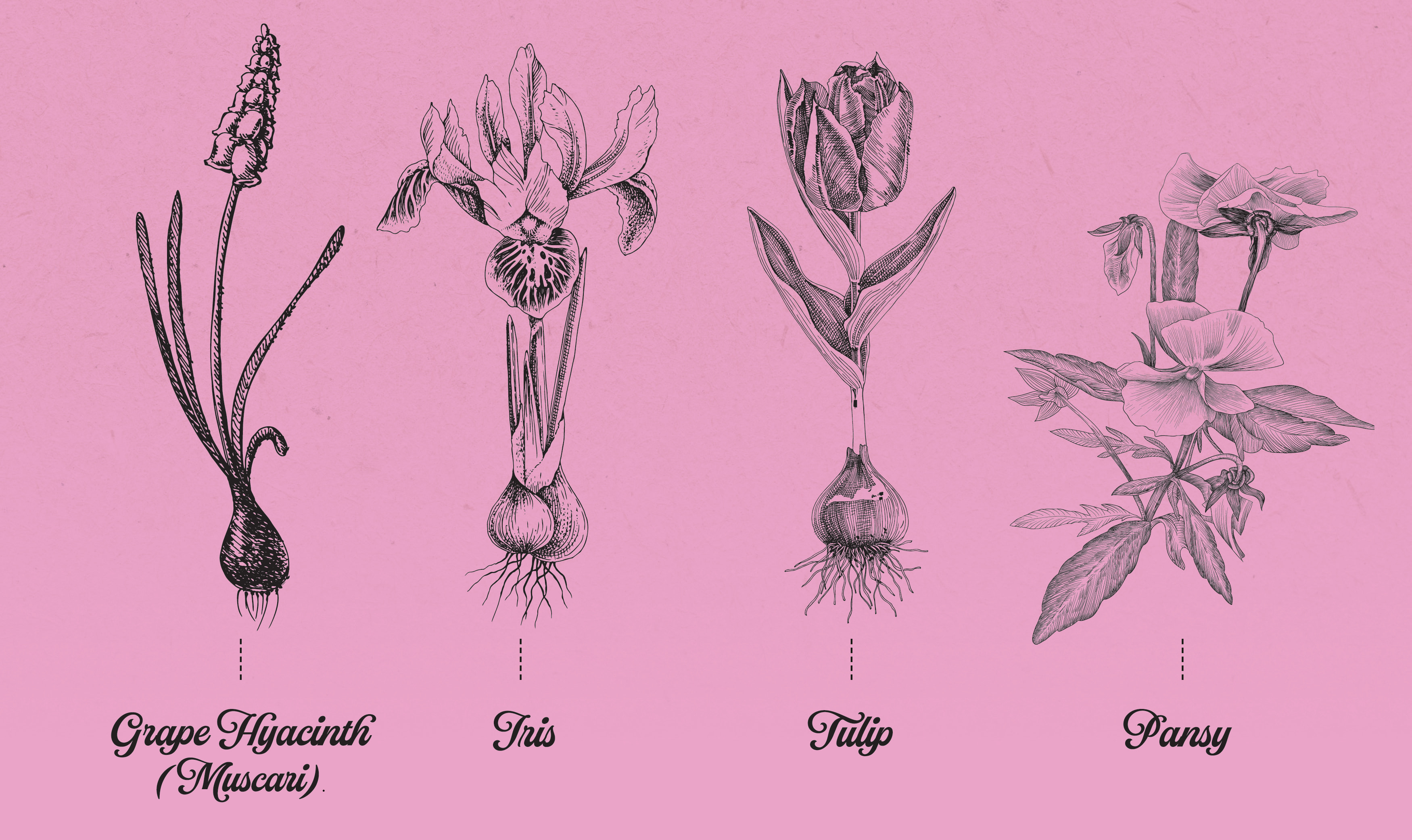
5. Grape Hyacinth (Muscari)
The grape hyacinth, sometimes called Muscari, is a distinct variety of the orientalis plant. You’ll recognize the grape hyacinth by the tight, clustered grape-shaped blooms in a gorgeous cobalt. Once in place, these spring flowers spread quickly to create a carpet of blue.
Muscari makes an outstanding border or container plant. Requiring minimal maintenance and adapting to most soil types, muscari are among the easiest spring flowers to grow.
- Zones: 4–8
- Care Tip: Plant muscari in areas with full sun or light shade and good drainage. After the plant has finished flowering, remove the circular green seed pods to encourage regrowth.
- Bloom time: Early to mid-spring
6. Iris
Irises are intricate and dramatic spring flowers to plant. Named after the Greek goddess who personified the rainbow, they’re known for their color spectrum, which includes deep blues, bright yellows, and even multicolored flowers.
They shine because they’re drought-resistant perennials. Ensure they have just a little water and a lot of sunlight.
- Zones: 3-9
- Care Tip: Plant in full sun and don’t overwater. Remove spent blooms consistently.
- Bloom time: Early to mid-spring
7. Tulip
Tulips are timeless spring flowers to plant. They come in every color except true blue, are long-lasting, and have an upright, elegant form that’s eye-catching.
Able to be planted in the spring or fall, most varieties multiply on their own, producing new bulbs each year and providing free flowers for your garden. Even better, tulips can be cut for indoor bouquets or centerpieces.
- Zones: 3–8
- Care Tip: Tulips are technically perennials but can be treated like annuals to maintain vibrancy.
- Bloom time: Mid to late spring
8. Pansy
Pansies bring cheer all the way until summer arrives and begin blooming again in the fall. With an array of patterns and hues like deep blues, energetic yellows, fiery reds, and striking blacks, they effortlessly fill empty spaces in beds or containers.
Low-growing and relatively self-sufficient, pansies aren’t only beautiful, but they’re also super easy spring flowers to grow. Additionally, their petals are edible and can serve as a decorative accent to classic cocktails, salads, desserts, and more.
- Zones: 3–8
- Care Tip: Plant in full sun or partial shade in rich, well-draining soil. Leave 6 to 12 inches between each plant so they can breathe.
- Bloom time: Early to mid-spring
RELATED: Embrace the Hottest Garden and Landscape Trends of the Season
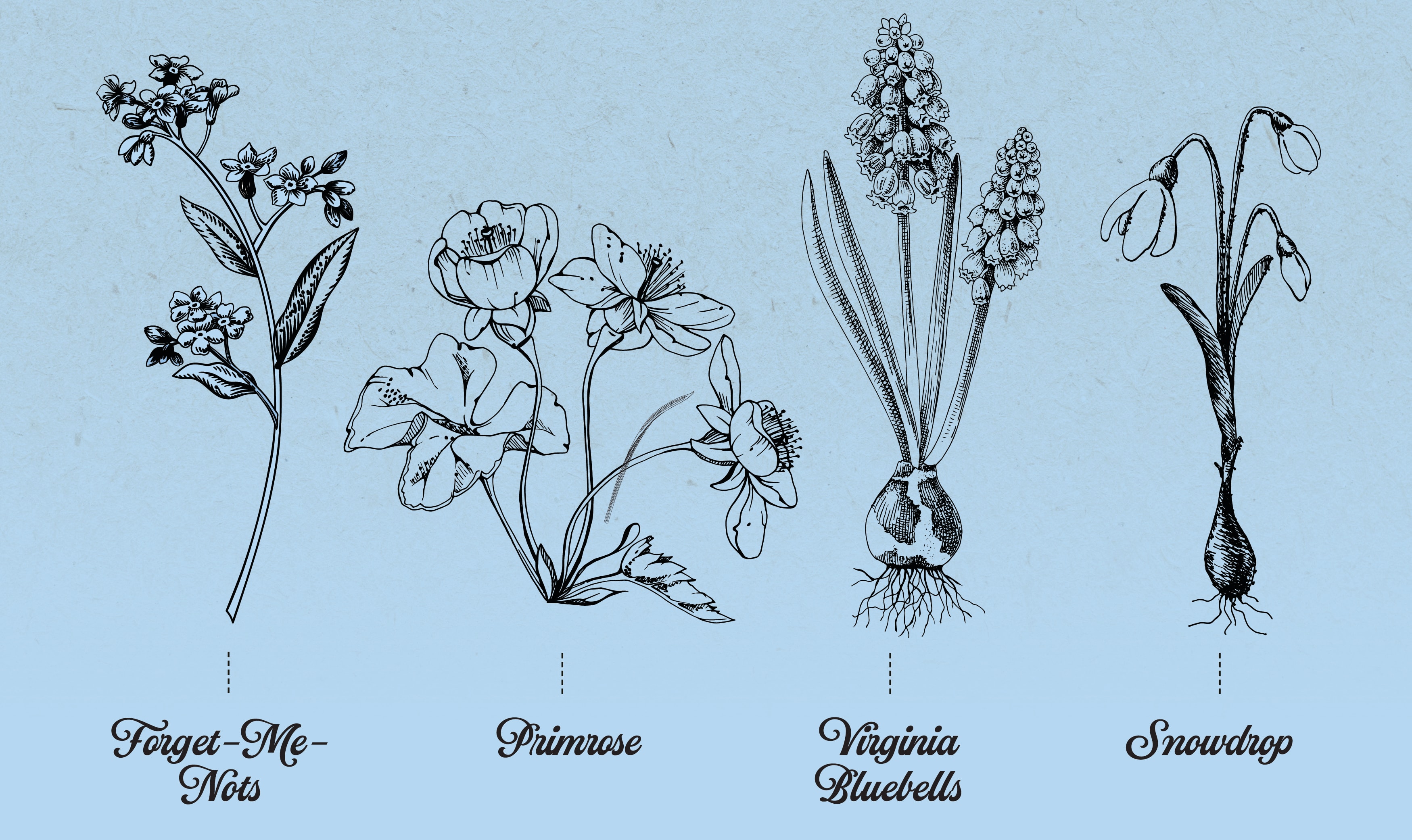
9. Forget-Me-Nots
Forget-me-nots grow as clouds of tiny flowers with white and yellow centers, long before many plants bud. This type of spring flower symbolizes love and remembrance and is a great addition to countless garden designs.
Fortunately, forget-me-nots are non-toxic to pets and don’t need your full attention. They prosper in dappled light near streams, ponds, or bogs.
- Zones: 3–9
- Care Tip: Avoid placing forget-me-nots in full-sun areas. Keep the soil moist but not soaked, and augment with compost or fertilizer annually.
- Bloom time: Early to mid-spring
10. Primrose
Primroses are sweet, compact spring flowers that burst in shades of pink, red, blue, yellow, and white. Their size makes them suitable for container gardens or edging walkways, and they can be divided to produce more plants over time.
Ideal for beginners, some species thrive in challenging conditions like sandy or rocky soils, and many of these easy spring flowers involve minimal maintenance.
- Zones: 3–8
- Care Tip: Buy while they’re in bloom. Plant in areas with partial to full shade and soil that’s rich, moist, and well-draining.
- Bloom time: Mid-spring
11. Virginia Bluebells
Virginia bluebells grow in clusters of flowers that transition from pink to sky blue. They’re the quintessential spring flowers to grow because they bloom wonderfully during the season, but disappear completely when summer hits, leaving space for new florals.
These buds are a crucial food source for early emerging pollinators, such as butterflies, hummingbirds, and bees, especially when other food options are limited.
- Zones: 3–9
- Care Tip: Plant in a shady spot with moist, well-draining soil that receives moderate filtered sunlight.
- Bloom time: Mid-spring
12. Snowdrop
The dainty white snowdrop flower gets its name because it can push through frozen or snow-covered ground. So, if you live in an area prone to early spring freezes, this spring plant will flourish.
“Snowdrop” is also the perfect name because the blooms grow in bundles of pure white. While they’re toxic for humans and pets, they’re virtually immune to pests.
- Zones: 3–7
- Care Tip: Grow in loose, well-drained soil under large deciduous trees.
- Bloom time: Very early spring
RELATED: Everything You Need to Know About Cold Weather Planting
More Spring Flower Types
From daffodils and crocus to tulips and snowdrops, these are the best flowers to plant in spring. With just a little TLC for these spring flowers, your garden is sure to be a showstopper this season.
Want to start bringing your greenery indoors? Check out the 10 low-maintenance houseplants for beginners.