How to Stain a Deck in 6 Steps

The average lifespan of a traditional wood deck is 10 to 15 years. The key to longevity? Proper maintenance, with deck staining at the top of the to-do list. Staining not only protects the wood and makes it pop, but it also provides a variety of other long-term benefits. Learn how to stain a deck in six simple steps with this guide.
What is Deck Staining?
Deck staining is the process of applying a protective finish to a wood deck to enhance its appearance and protect it from environmental factors, like sun and water exposure.
Why You Should Stain Your Deck
An alternative to painting, deck stain colors saturate the wood’s natural color to improve the look and feel. Wood staining also:
- Shields wood from rotting, mold, mildew, and insects
- Creates a barrier between the wood and ultraviolet light
- Prevents wood fading
- Protects against water damage
RELATED: 10 Easy Ways to Instantly Improve Your Home’s Curb Appeal
When to Stain a Deck
Your deck will let you know when restaining is necessary. Though it’s ideal to keep a consistent schedule regardless of wear and tear, signs of aging can be seen and felt as long as you’re staying aware. Some of the key things to monitor are:
- Water absorption. If water that falls on the deck is absorbed immediately, the protective barrier created by wood staining is gone.
- Peeling. Old stain jobs will start to peel and bubble.
- Color fading. Colors will become gray and dull as wood stains age.
- Texture. Wood will start to crack and feel fuzzy or rough.
Best Time to Stain a Deck
Deck staining works best under specific weather conditions. Aim for a rain-free forecast and mild temperatures. Showers will wash away a fresh stain, and heat above 90°F will dry the wood too quickly, resulting in an uneven finish.
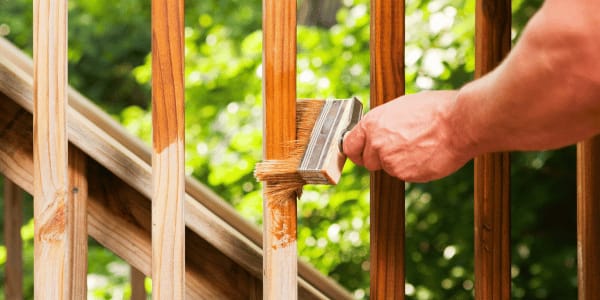
How to Stain a Deck in 6 Steps
Staining a deck doesn’t have to be complicated. Professional deck-staining services are available, but with proper preparation and careful step-by-step instructions, DIYers can take on the task with ease. Learn how to stain a deck in six easy steps:
1. Test the Deck
Not all decks respond to wood staining the same way. In some cases, staining the wood can actually do more harm than good.
To see if your deck will take a stain, spray or sprinkle some water on the wood. If it soaks in, your deck is likely a candidate for staining. If the water rests on the deck or beads up, staining may not be the best solution. This indicates that your deck has a sealant, which needs to be sanded or stripped before wood stain can be applied.
2. Prep the Deck
Once you’ve tested the deck for staining, you’ll need to prep the surface. Here’s how to prep a deck for staining:
- Check for damaged boards and replace them if needed
- Sand down any areas with splinters or raised wood
- Replace any nails that have come out of place
- Clean the cracks between your boards
- Remove any items from your decks, like backyard furniture
- Sweep your deck to remove trash and debris
- Water and cover nearby plants
- Cover nearby concrete, lighting, siding, and electrical outlets
3. Clean and Rinse the Deck
The next step is cleaning the deck. Apply a deck cleaning solution with a roller or broom. Scrub out persistent stains, and let the rest soak into the wood without completely drying. Once everything has rested for about 10 minutes, give the deck a detailed rinse and let it dry for 24 to 48 hours.
4. Choose the Right Deck Stain
There’s a lot to think about when it comes to buying the right deck stain. First, consider what color you want your deck to carry. Shades of gray, brown, and black are often the most popular. Pick something that will complement your existing outdoor setup, and remember that darker colors will absorb more heat and potentially be uncomfortable to walk on.
Once you’ve decided on a shade, choose an oil- or water-based deck stain. Oil-based stains offer superior protection against moisture and saturate wood deeply, while water-based options dry faster, provide better protection against mold/mildew, and can be removed more easily. You’ll also need to pick from one of three transparency levels:
- Transparent. Transparent stains give wood a more natural appearance, adding minimal color. But they need to be reapplied more frequently to maintain the look.
- Semi-transparent. Semi-transparent stains add some color to the wood without looking painted.
- Solid. Solid stains give a painted-on appearance. They provide optimal UV protection and last longer, but are difficult to remove.
5. Apply the Stain
Once your deck is dry, you can finally apply your deck stain. Remember to:
- Apply stain in thin, even coats
- Avoid direct sunlight, so the stain doesn’t dry too quickly
- Use a paint brush, roller, or staining pad to go over two or three boards at a time
- Use a paint brush for in between gaps, corners, and railings
- Have a helper with you to check for spots where you overapplied solution
- Apply a second coat of stain if the instructions tell you to
6. Let it Dry
The drying process is the key final step to perfect deck staining. Let everything sit for 24 to 48 hours before you start bringing back plants, furniture, and anything else you removed. Proper drying will allow for an even finish that lasts.
RELATED: 8 Essential Home Fixes to Boost Your Sale Price Before Listing
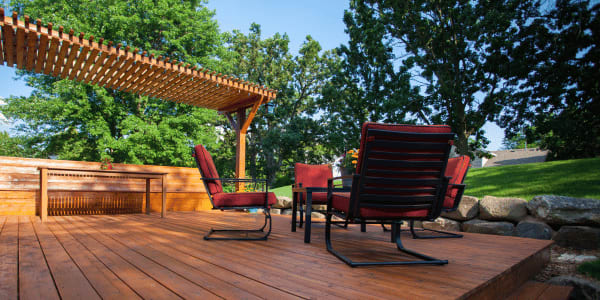
Doing More for Your Deck
Once you understand how to stain a deck, the rest is easy. Read “Deck Maintenance 101” for five tips to keep your deck in good working condition for the long haul. Combined with your deck staining work, your backyard will be a beautiful space for years to come.
Deck Staining FAQs
What month is the best time to stain a deck?
Late spring (May-June) and early fall (September-October) are the best months to stain a deck. Stain a deck on a rain-free day (50°F–90°F) with low humidity to prevent stains from drying too quickly.
Does a deck need two coats of stain?
Two thin coats are recommended for maximum protection and color, especially with water-based deck stains. Oil-based deck stains usually only require one coat.
How often do you need to stain a wood deck?
To protect the wood, a deck should be stained every two to three years. That way, the wood stays in good shape, and your deck maintains its brand-new appearance.
What happens if I don’t stain my deck?
Whether you decide to paint or stain your deck is up to you. Untreated wood can still maintain its integrity for years to come. However, after about 6-8 months, the wood will start to fade from brown to a gray or silver color.