Why Americans Celebrate Flag Day Every June

This summer, there’s a lot to look forward to as America’s 250th-anniversary celebrations take center stage. However, June also hosts a specific tribute to the very fabric of our nation: the American flag. Flag Day is when we honor the adoption of the Stars and Stripes as a symbol of the United States' unity, resilience, and spirit. Get to know the holiday better by learning about Flag Day’s history, meaning, and traditions.
What Is Flag Day?
Flag Day is when we, as a nation, observe the official banner of the United States. It’s a day to recognize the flag as a living symbol of the journey this country took and the history we all share.
When Is Flag Day?
Flag Day is easy to remember because it always falls on the same day. Flag Day is June 14, the anniversary of the Second Continental Congress’s adoption of the design for the national flag. June 14 marks the moment the United States chose to represent itself to the world as a single, recognizable visual voice.
History of Flag Day
The path to making June 14 a recognized holiday was a long one led by passionate citizens and their grassroots campaign. Despite the importance of that moment in history, the recognition of it took nearly a century. Wisconsin schoolteacher Bernard J. Cigrand spent his life advocating for a National Day of Recognition, a campaign that earned him the title of “Father of Flag Day.”
His efforts, along with those of a few others, such as William T. Kerr, caught the attention of the White House and President Woodrow Wilson. He issued a proclamation officially establishing June 14 as Flag Day. It wasn’t until 1949 that President Harry S. Truman signed the Act of Congress designating the day as a national observance.
Meaning Behind the American Flag
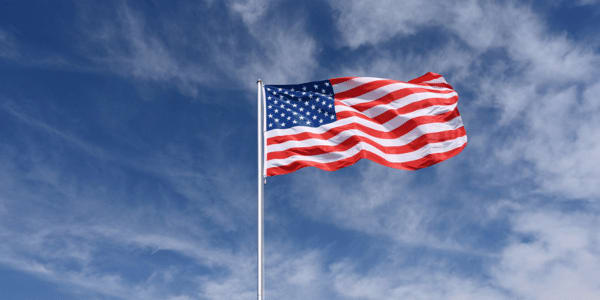
Every element of the American Flag carries significance:
- The 13 Stripes: The alternating red and white stripes on the flag represent the original 13 colonies that stepped away from England to declare independence.
- The 50 Stars: Each star represents a state in the union, signifying that while the country has many parts, we stand as one nation.
- The Colors: The colors are symbolic, as well. Red stands for hardiness and valor. White symbolizes purity and innocence, and blue represents vigilance, preservation, and justice.
Flag Day vs. Independence Day
Often, people lump Flag Day with Independence Day, and that’s understandable. However, they do represent two distinct chapters of American History and are uniquely different:
- Independence Day, celebrated on July 4th, commemorates the signing of the Declaration of Independence.
- Flag Day, on June 14, focuses on the nation's identity and its symbol.
Why Flag Day Is Less Widely Celebrated?
Flag Day isn’t a federal holiday like the Fourth of July. Federal holidays mandate time off work for most Americans.
Instead, Flag Day is a day of observance. Businesses stay open, the mail keeps moving, and people go to work instead of the lake or barbecues.
RELATED: Delicious Dips for Your Next Cookout

How to Celebrate Flag Day
Celebrating Flag Day 2026 can be simple. Consider six things you can do this year for Flag Day:
1. Fly the Flag
The most impactful way to celebrate this holiday is to display the flag, preferably where everyone can see it.
2. Say the Pledge
Traditionally, the nation as a whole recites the Pledge of Allegiance at 7:00 PM EDT.
3. Support Community Flag Day Celebrations
Check whether there are any local celebrations to attend.
4. Visit a Local Cemetery
On Flag Day, people often place small flags on veterans' graves.
5. Attend a Flag Retirement Ceremony
Flag Day is when many local VFW or Boy Scout troops hold a ceremonial flag-burning for flags that are frayed or in poor condition.
6. Share the Story
Flag Day is a good time to tell the story of the flag and its evolution to the next generation. You can also offer to read at a local library or school.
RELATED: 7 Easy Ways to Support Your Local Library Right Now
Fun Facts about Flag Day
- Student Design: The current 50-star flag design was created by 17-year-old student Robert G. Heft for a class project. The teacher initially gave him a B-minus for the design, but upgraded it after President Eisenhower chose it for the new flag.
- Wisconsin is Flag Country: That’s not surprising when you consider Wisconsin resident Bernard Cigrand is the Father of Flag Day.
- Six Lunar Flags: There are a total of six U.S. flags on the moon.
- Sunrise to Sunset: Ideally, you only fly your flag from sunrise to sunset unless you can shine a light on it at night. Exceptions to this rule are specific government locations such as the White House.
- Pennsylvania State Holiday: Pennsylvania is the only state that recognizes Flag Day as an official holiday.
- What about Betsy Ross: The story of Betsy Ross sewing the first flag is a classic, but is it true? Many historians believe that Francis Hopkinson, a signer of the Declaration of Independence, designed the American flag. They do credit Betsy Ross for sewing the first flag based on Hopkinson’s design.
The Takeaway
The flag remains a symbol of the resilience and unity of the United States. The design continues to evolve; it’s changed 27 times over the last 250 years, but the core meaning remains the same. Whether you decide to respectfully fly a flag from your porch or wear red, white, and blue this June 14, you’re participating in a celebration that spans centuries.
Flag Day FAQs
Is U.S. mail delivered on Flag Day?
Yes, Flag Day isn’t a federal holiday, so mail service is available.
Are banks open on Flag Day?
Yes, the banks remain open on that day and operate during normal business hours.
Which president started Flag Day?
President Woodrow Wilson proclaimed June 14 as Flag Day, but Truman signed the legislation in 1949 to make it official.
Is Flag Day a federal holiday?
Flag Day is not a federal holiday, but a national observance. Government offices and schools remain open. Pennsylvania does celebrate it as a state holiday, though, so state offices there close that day.